
decoding
neurodiversity
Commissioned by the Ministry of Education (MOE) Singapore, this editorial illustration series serves as a practical visual resource for educators. Designed to help teachers decode, understand, and support neurodiversity in mainstream classrooms, the artwork translates complex learning profiles—such as Dyslexia, Autism Spectrum Disorder (ASD), and Attention Deficit Hyperactivity Disorder (ADHD)—into accessible, empathetic visual narratives that promote inclusive teaching practices.
Client: SEN Project, Ministry of Education (MOE) Singapore
How can illustration turn complex educational insights into accessible classroom tools?
Commissioned by the Ministry of Education (MOE) Singapore, this brief called for an editorial poster series designed to help teachers decode and navigate neurodiversity in mainstream classrooms.
The challenge was to translate the lived experiences, traits, and strengths of students with Dyslexia, ASD, and ADHD into engaging, empathetic visual narratives to promote empathy and inclusive learning.
Fostering inclusive classrooms
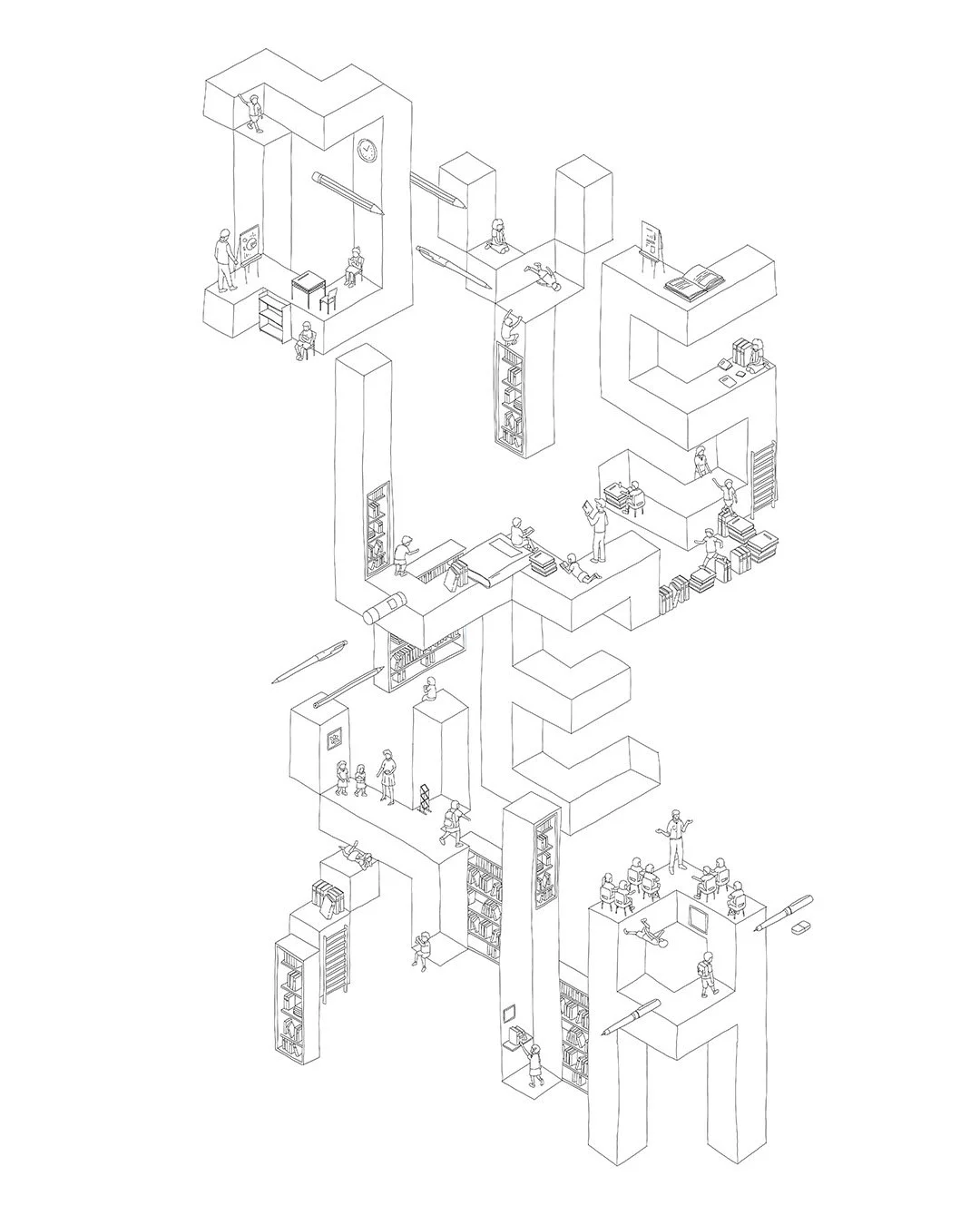
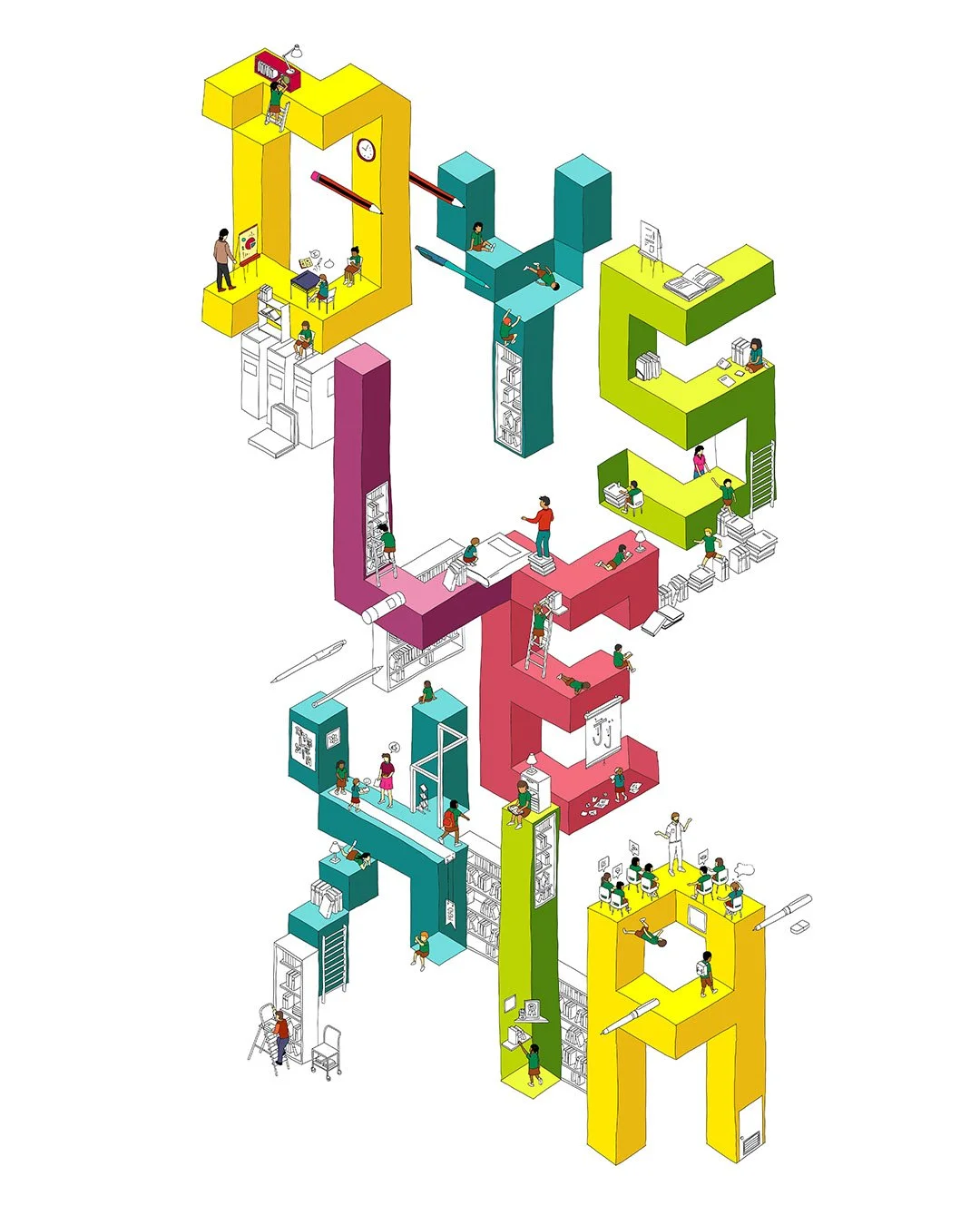
Each poster translates a distinct neurodivergent experience through its own visual logic: flipping perspectives for Dyslexia, multi-directional focus for ADHD, and repetitive grids for ASD.
Dyslexia
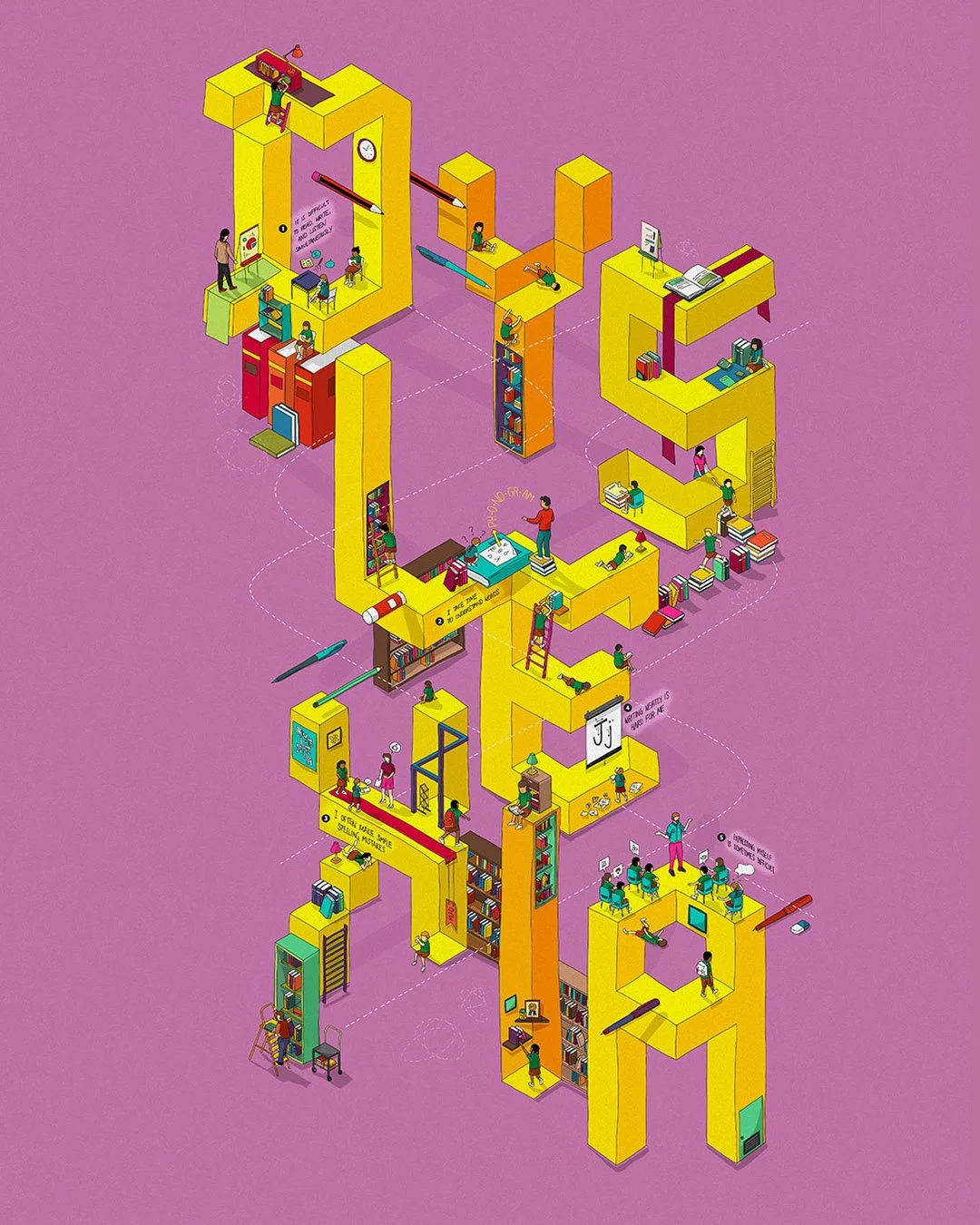
Inspired by the spatial paradoxes of M.C. Escher, the typography features twisting planes, inverted geometry, and confusing spatial layouts.
This visual layout mirrors the confusion and mental effort dyslexic individuals experience when trying to navigate linear text and spatial layouts.
Embedded within the artwork are five key symptoms and signs of dyslexia, serving as a practical guide for teachers to spot reading difficulties and learning differences in early childhood education.
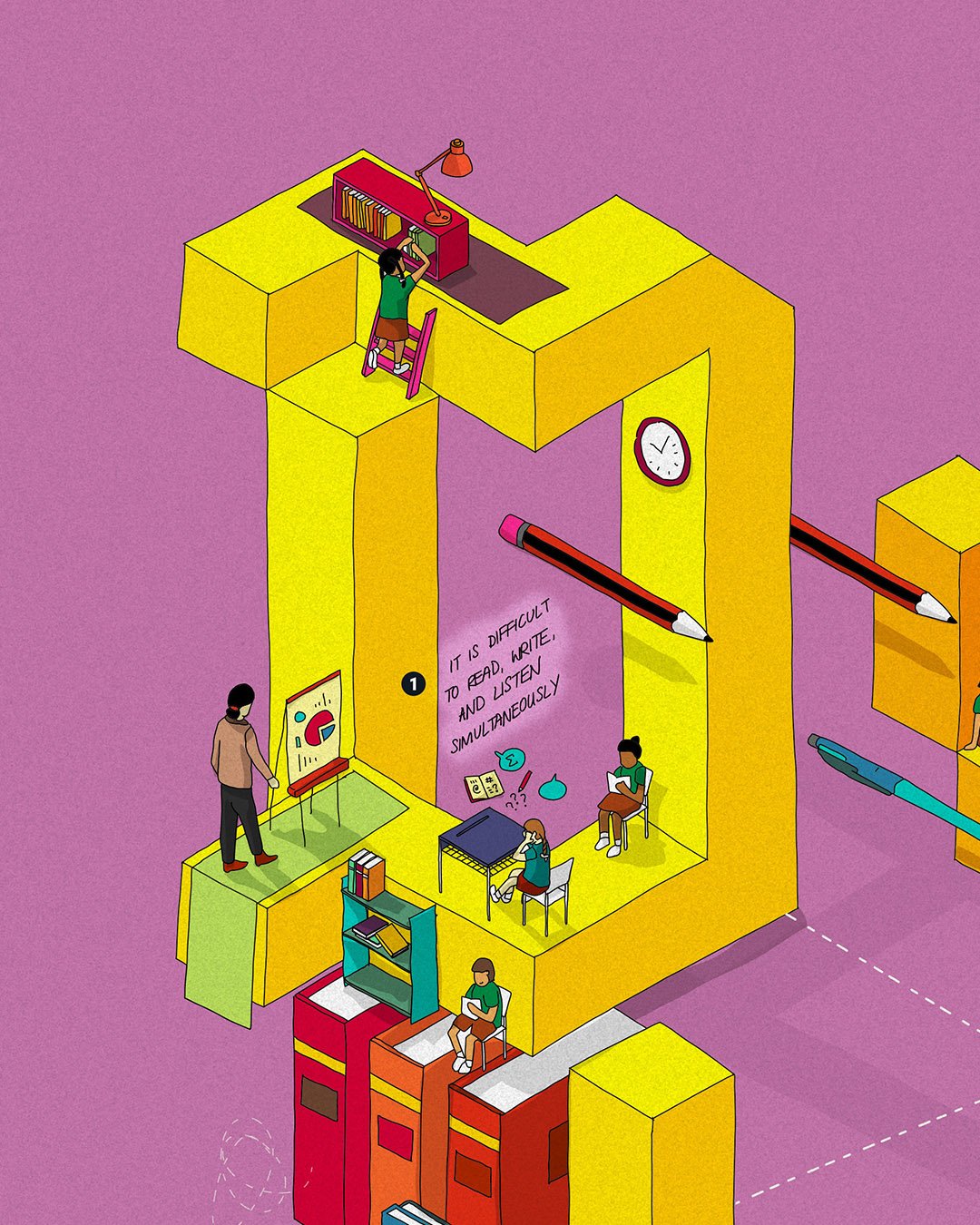
1. It is difficult to read, write, and listen simultaneously
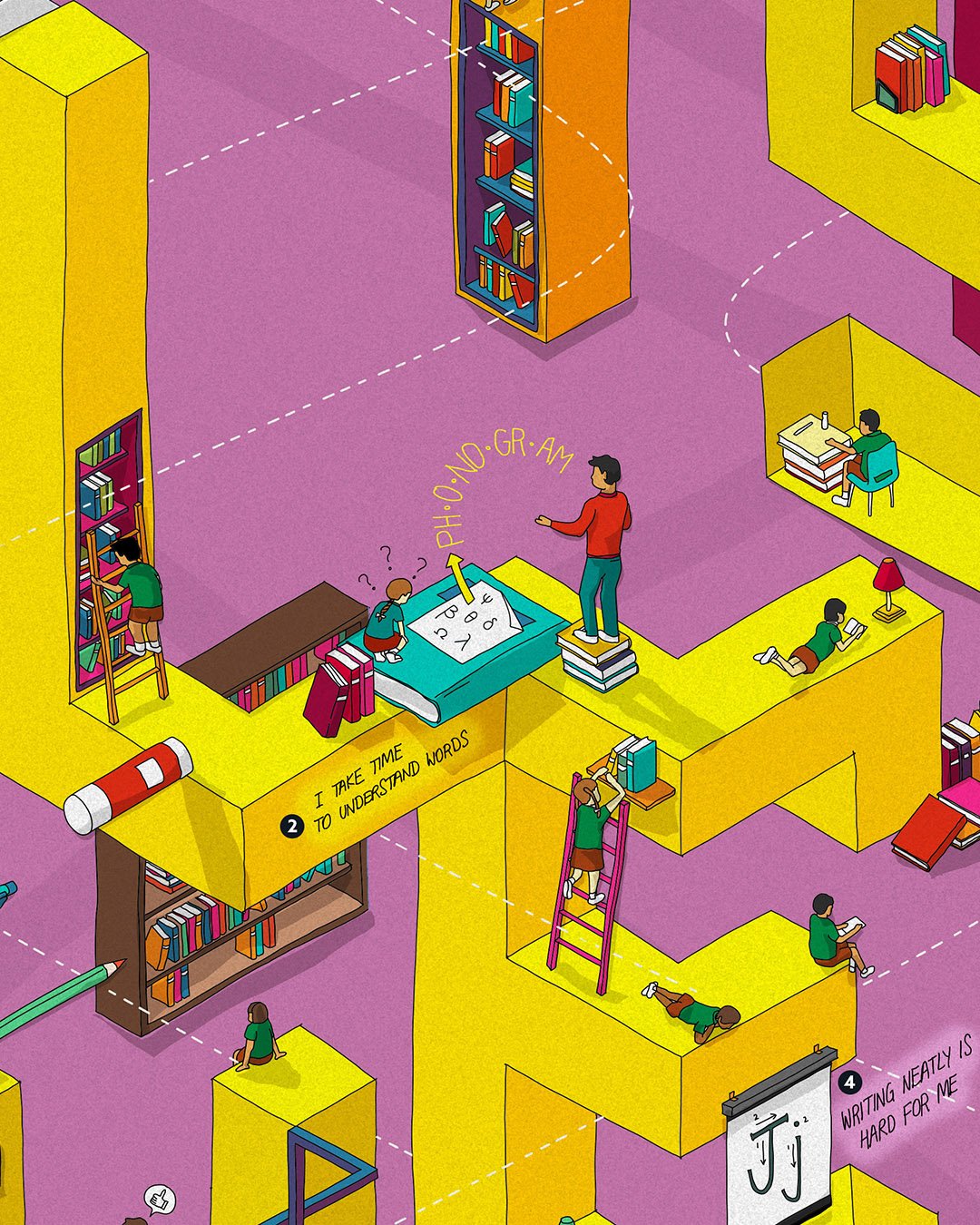
2. I take time to understand words. [It's all Greek to her!]
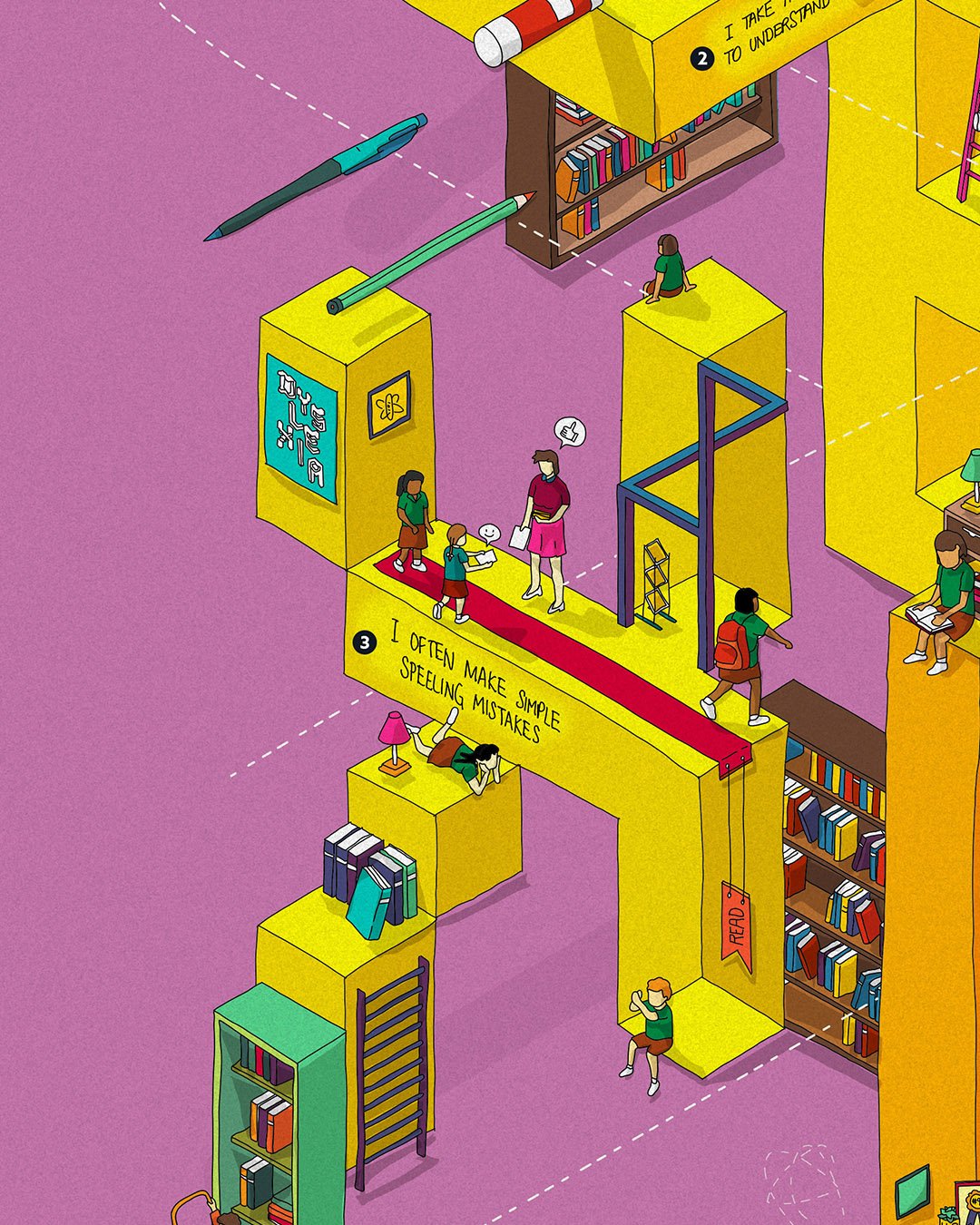
3. I often make simple spelling mistakes [*speeling — I couldn't help but add a little easter egg in there!]
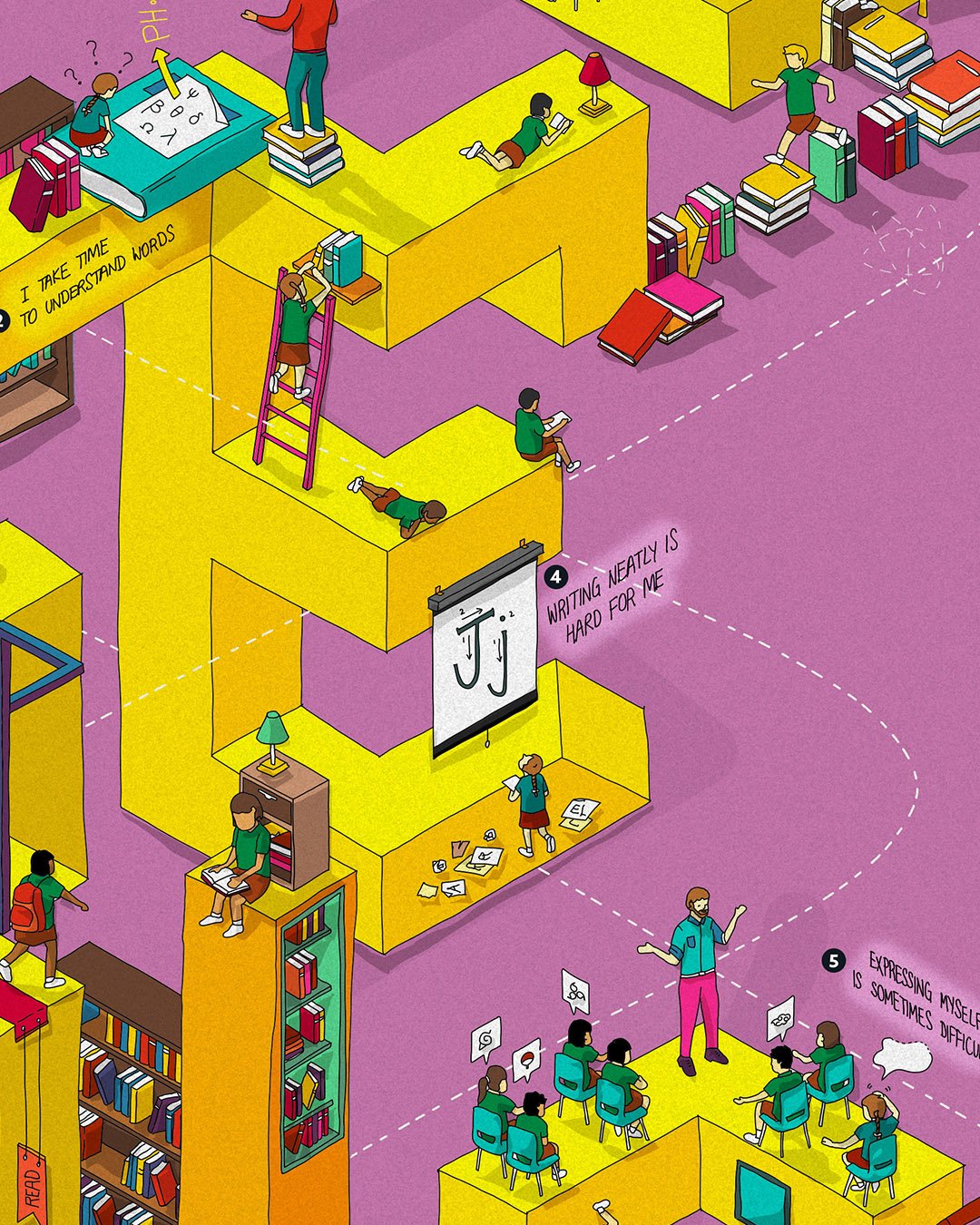
4. Writing neatly is hard for me
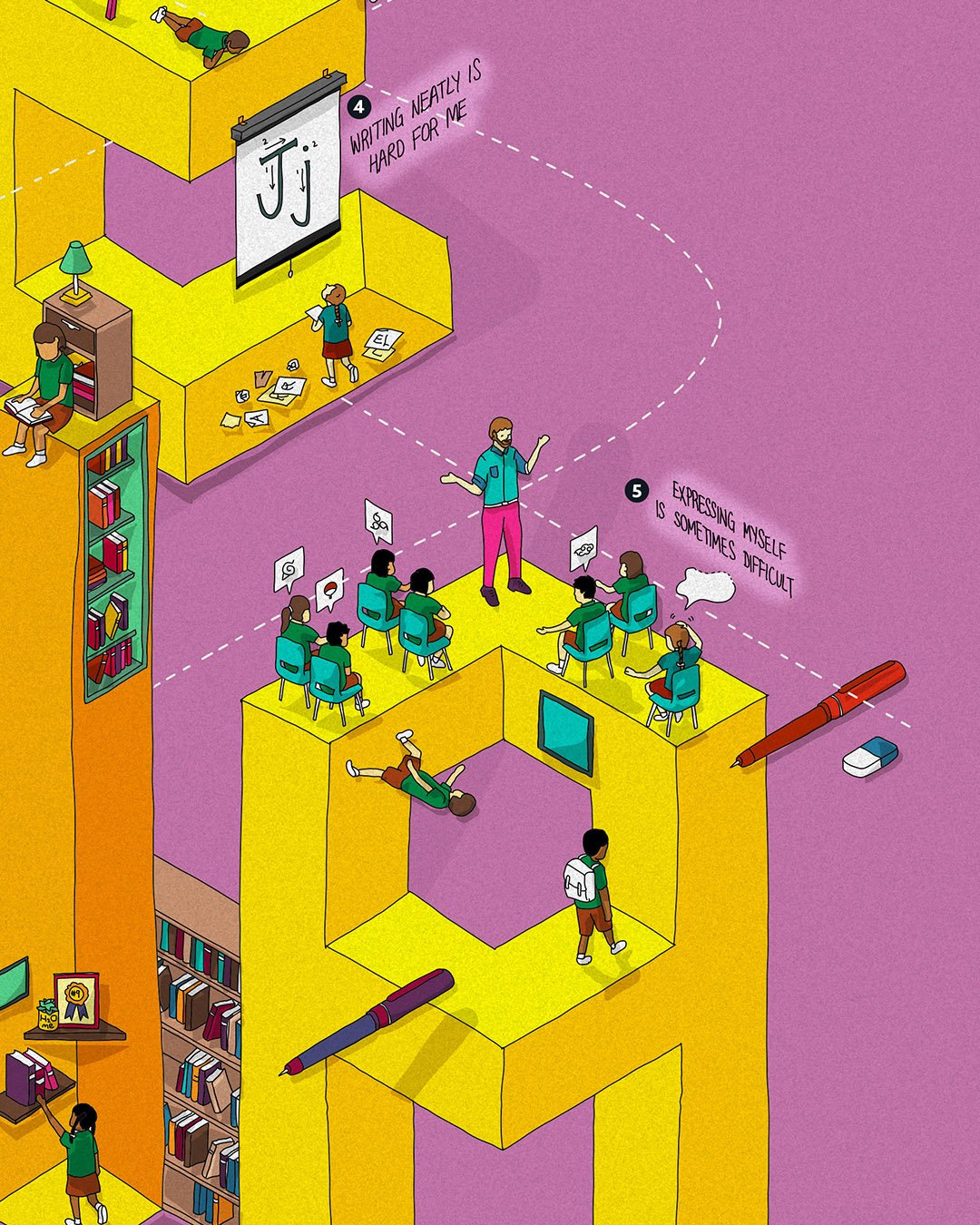
5. Expressing myself is sometimes difficult
ADHD (Attention Deficit Hyperactivity Disorder)
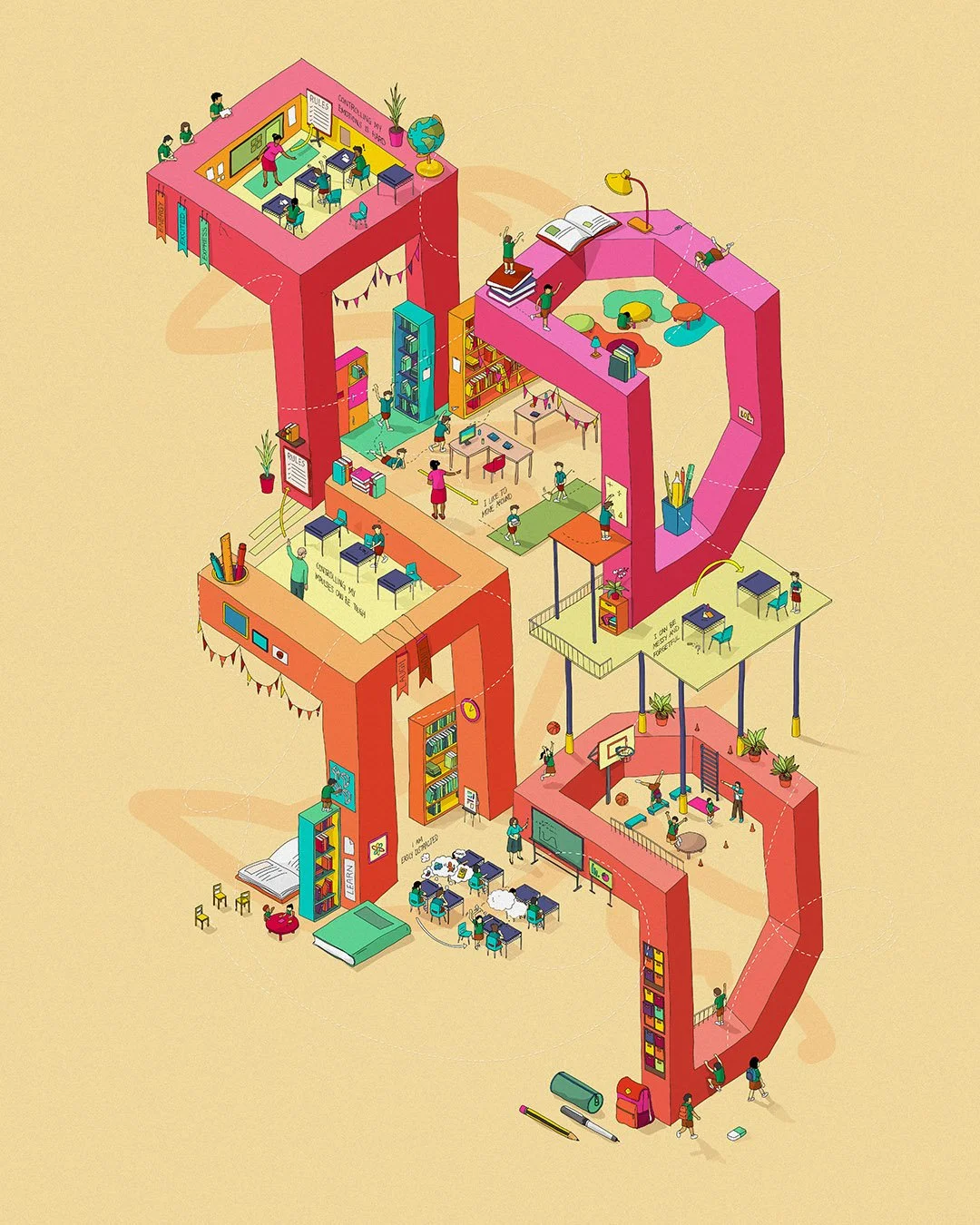
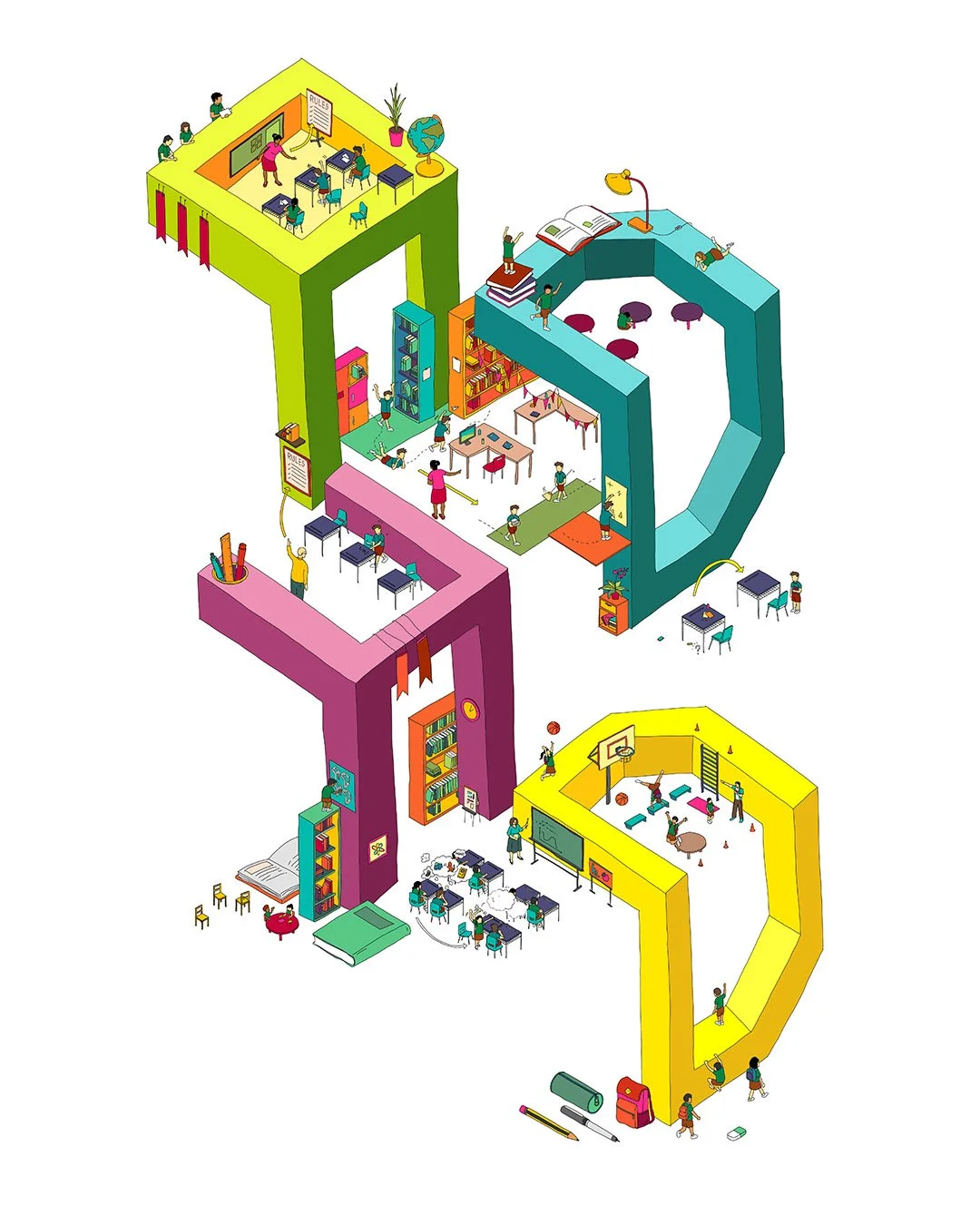
The letterforms are built from disjointed, shifting structures with competing perspective lines that pull the eye in multiple directions simultaneously.
This multi-directional composition visually captures the hyper-stimulated, fast-shifting focus characteristic of the ADHD experience, where attention is constantly pulled toward competing stimuli.
Detailed visual vignettes illustrate five identifiable traits of ADHD to assist teachers in recognising early signs of neurodivergence in student behaviour.
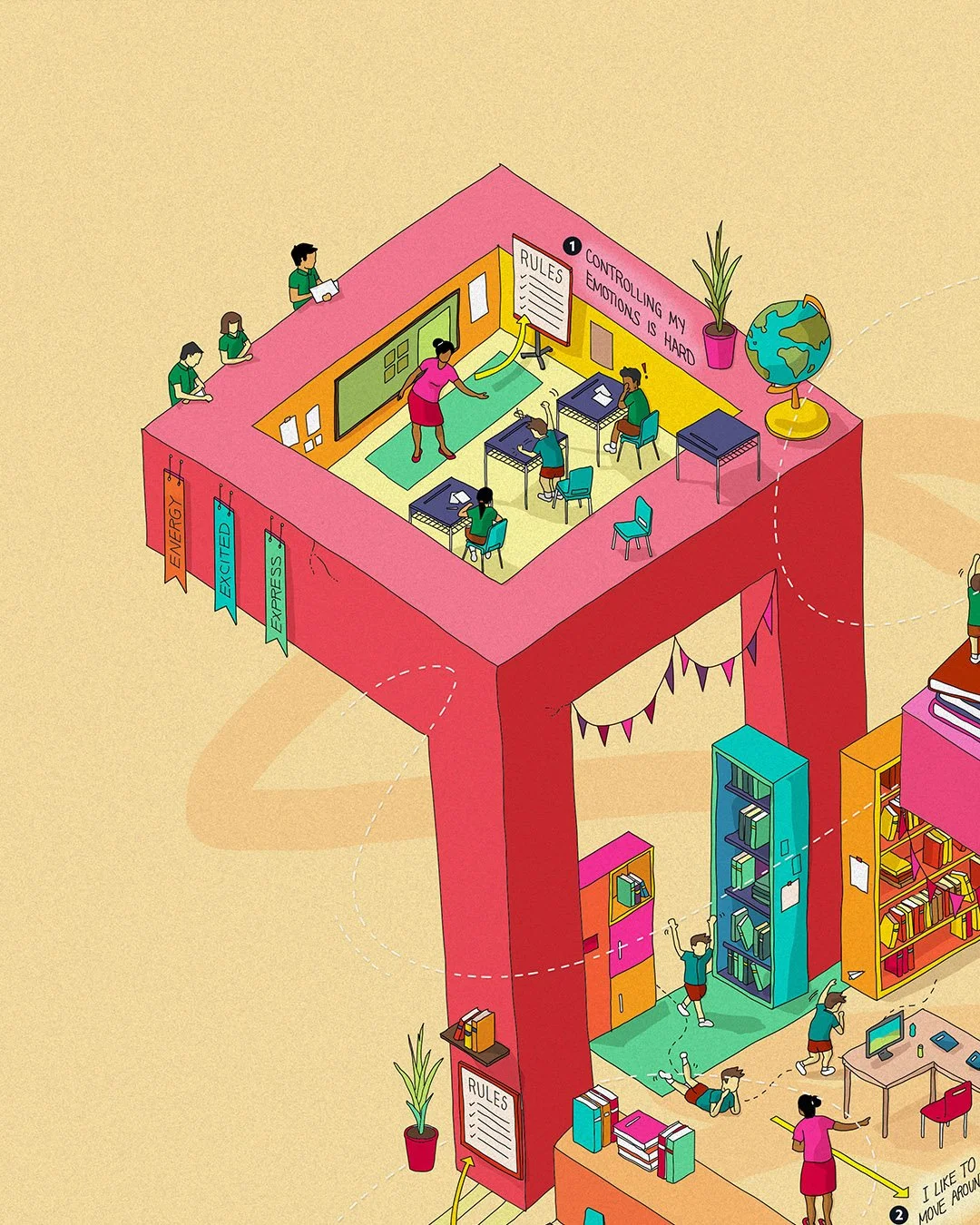
1. Controlling my emotions is hard
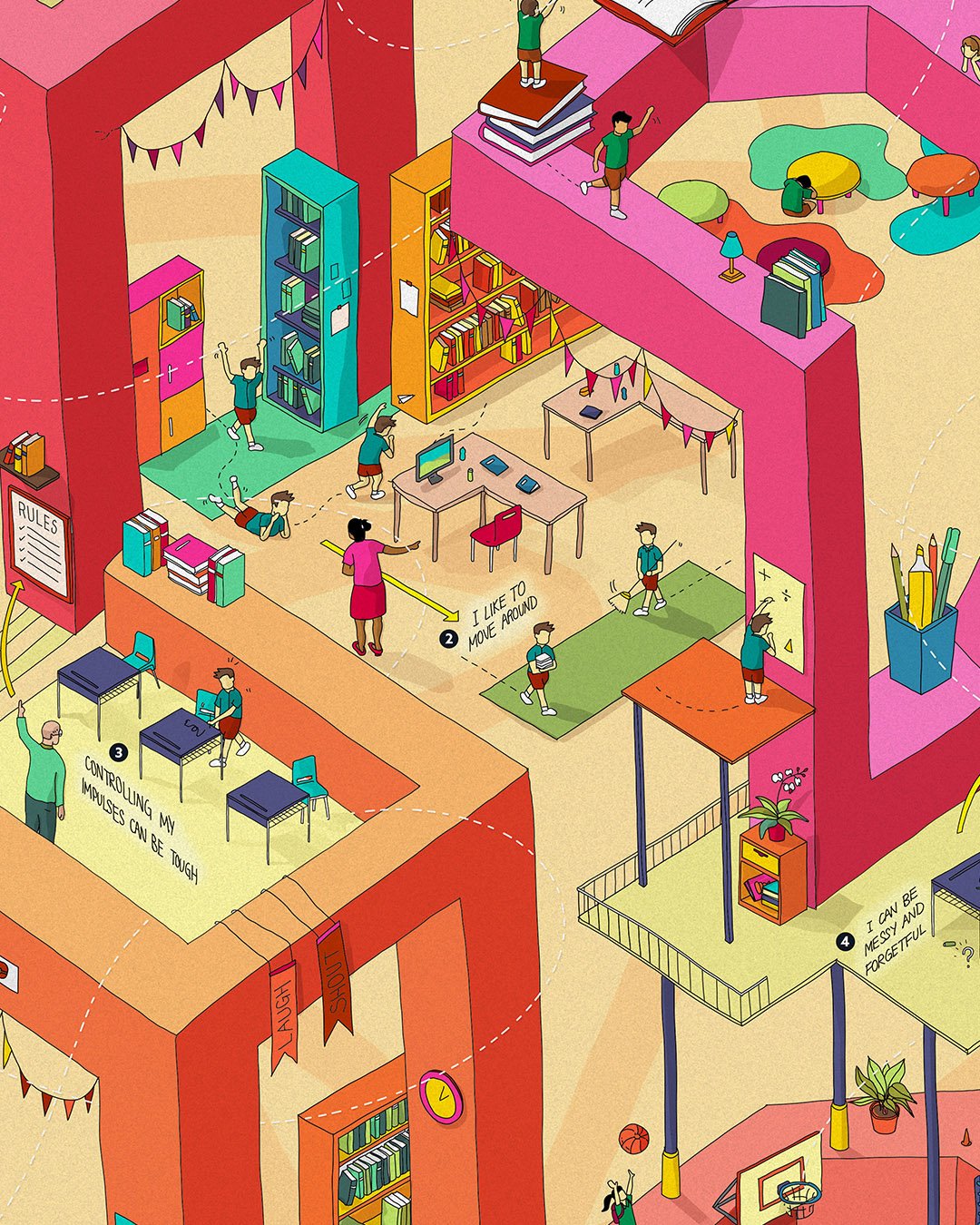
2. I like to move around
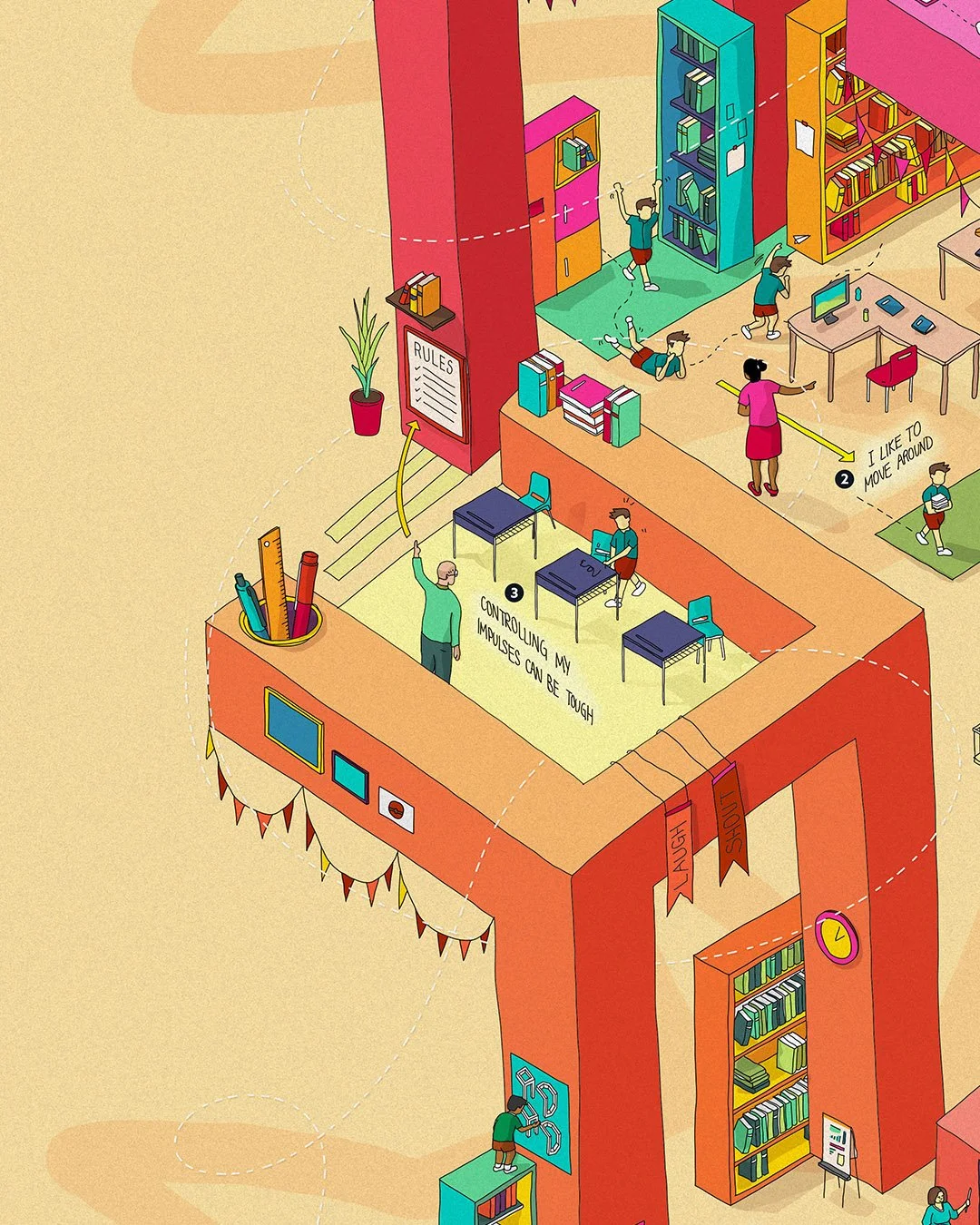
3. Controlling my impulses can be tough.
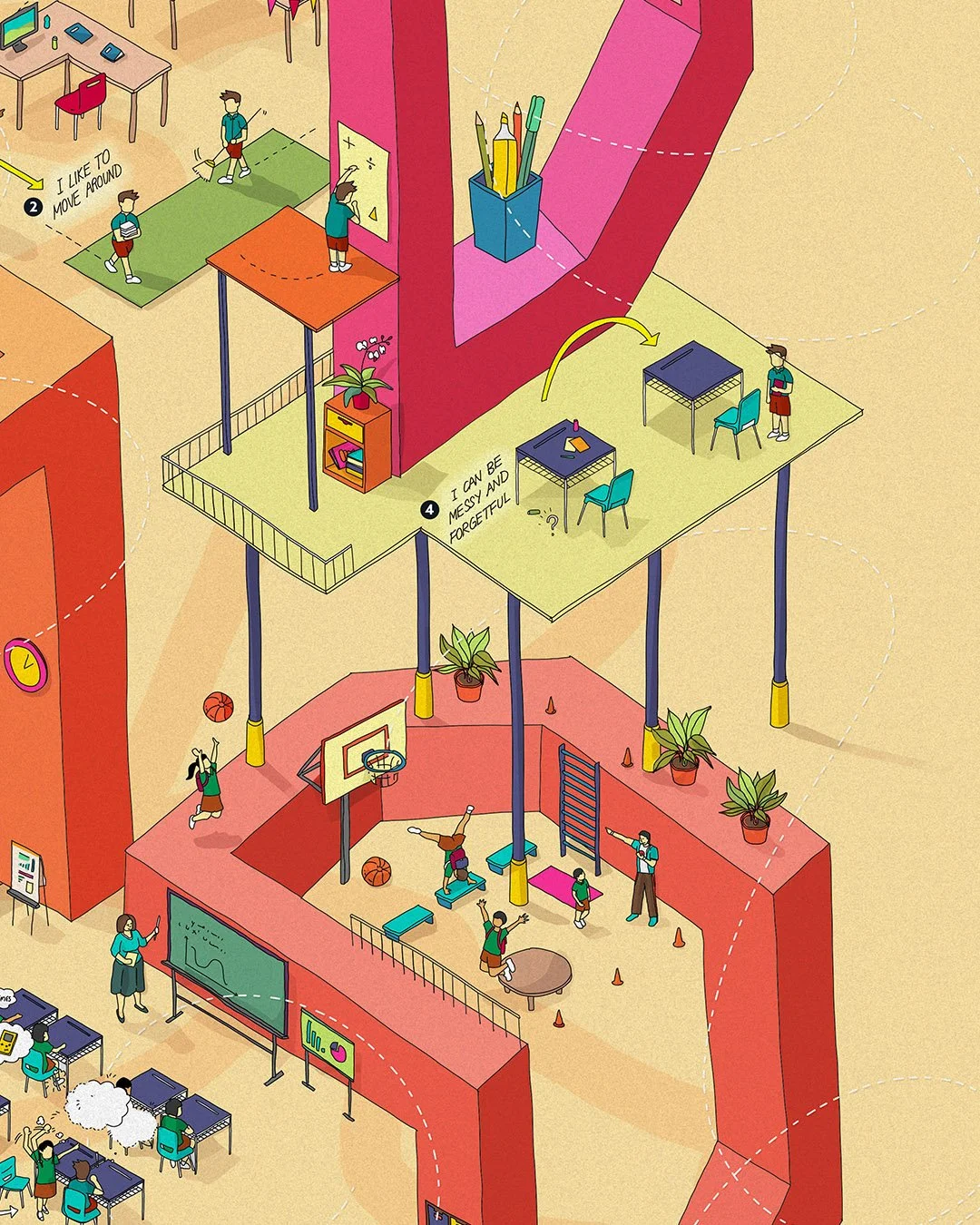
4. I can be messy and forgetful
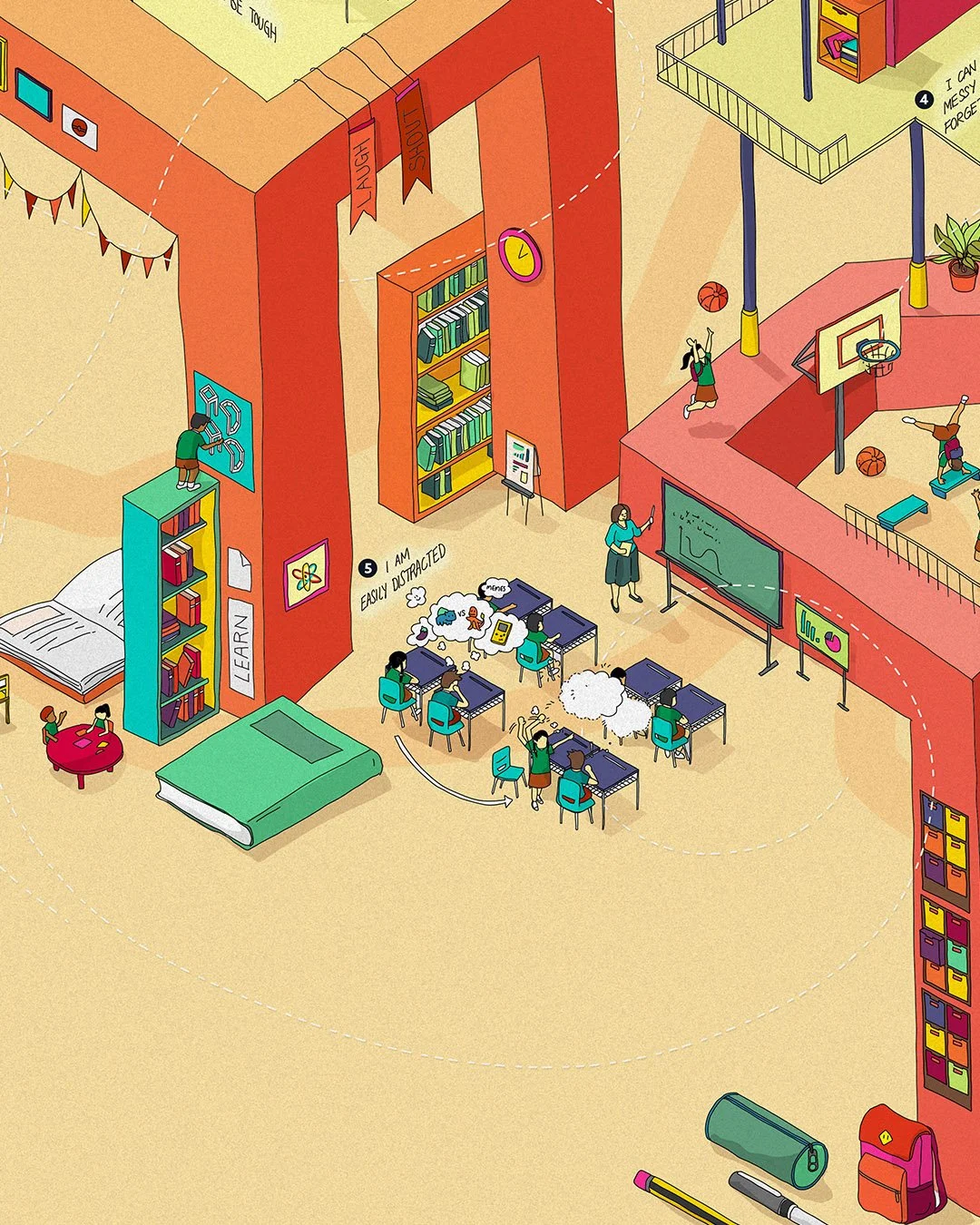
5. I am easily distracted
ASD (Autism Spectrum Disorder)
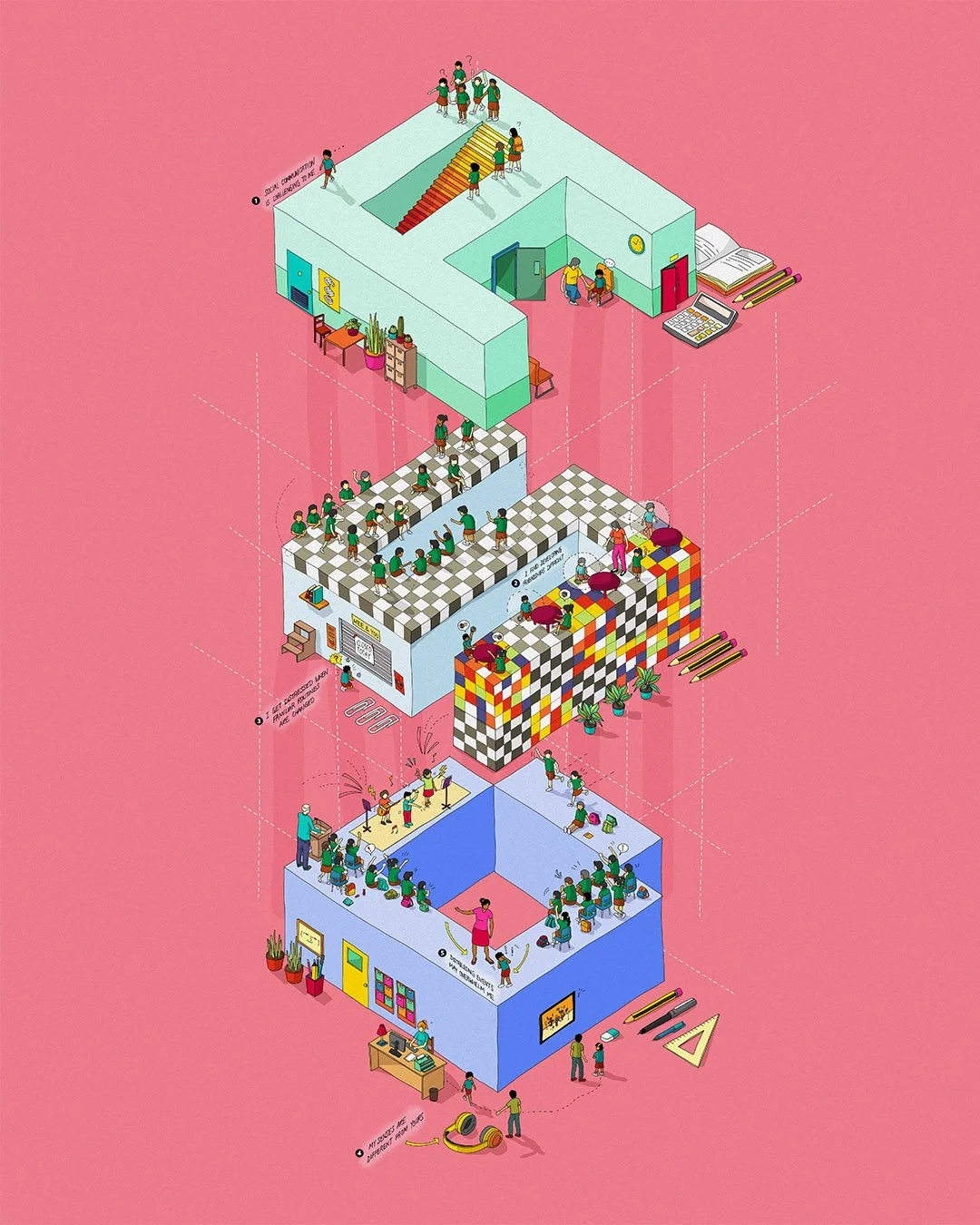
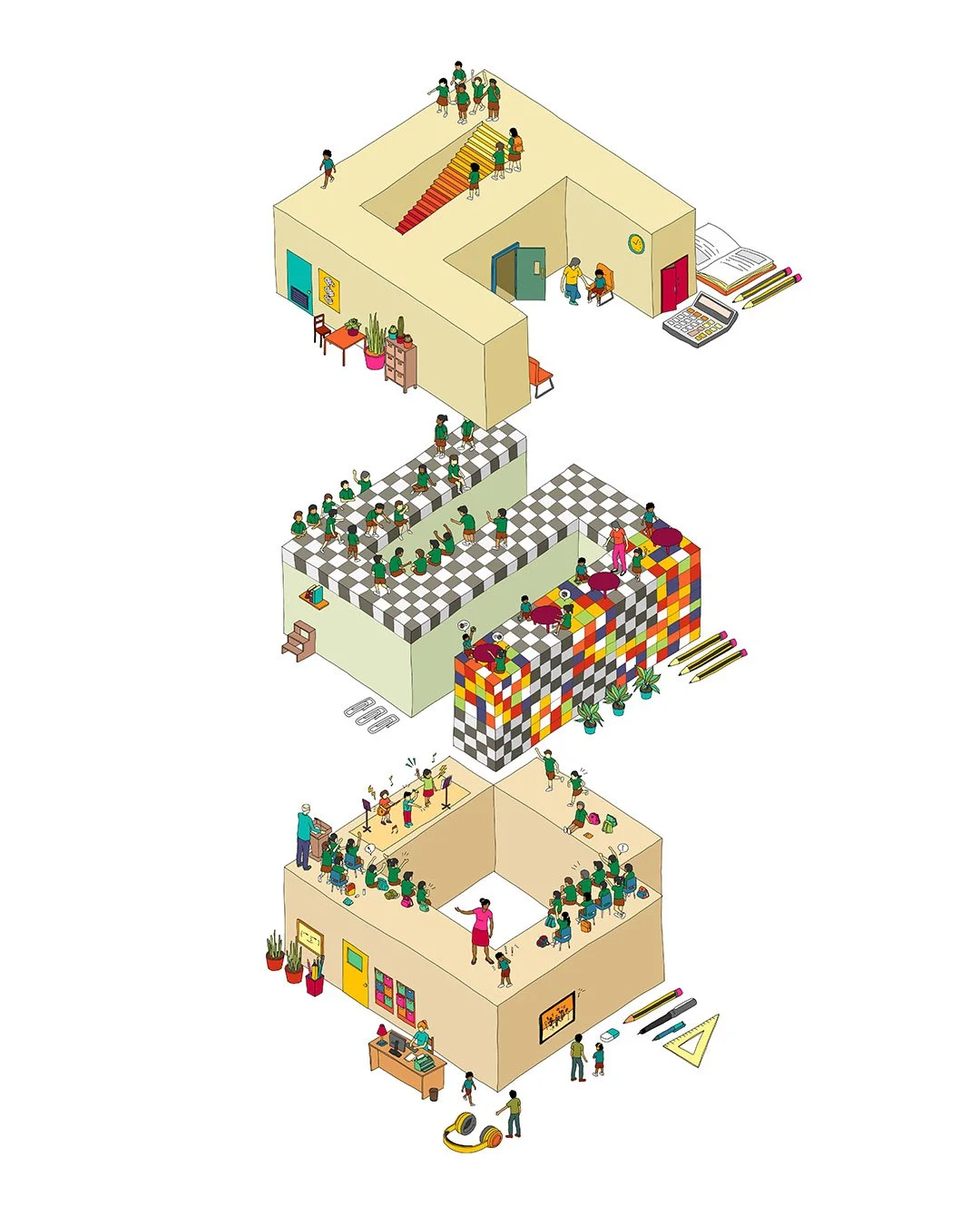
In contrast to the previous two posters, the Autism Spectrum Disorder illustration is rendered through strict geometric order, rhythmic structures, and modular layouts.
The composition reflects the comfort, predictability, and emotional grounding that structured routines and systematic environments provide for many individuals on the autism spectrum.
The illustration depicts five common signs of Autism Spectrum Disorder (ASD), equipping teachers to identify autistic traits in students and implement inclusive learning strategies.
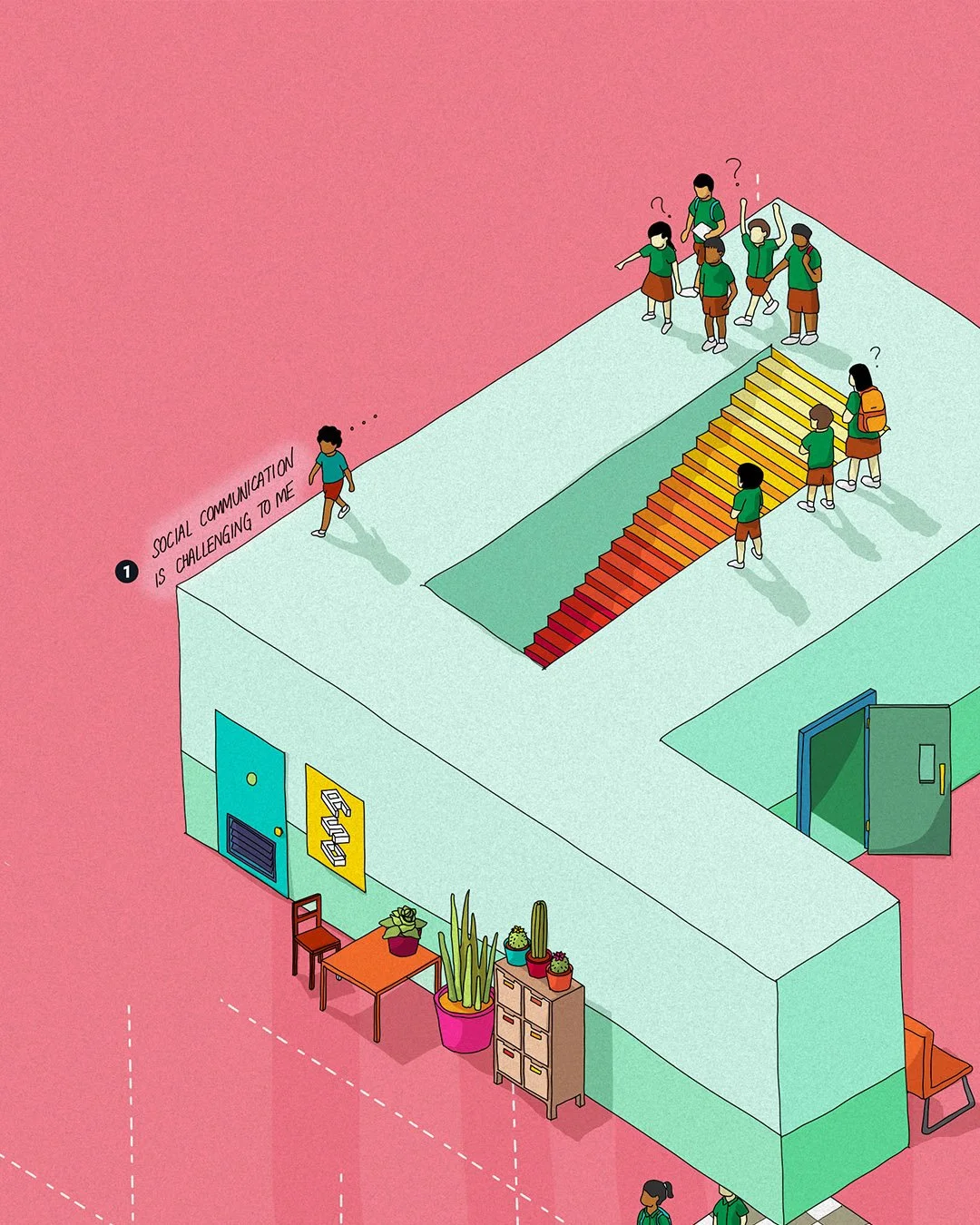
1. Social communication is challenging to me
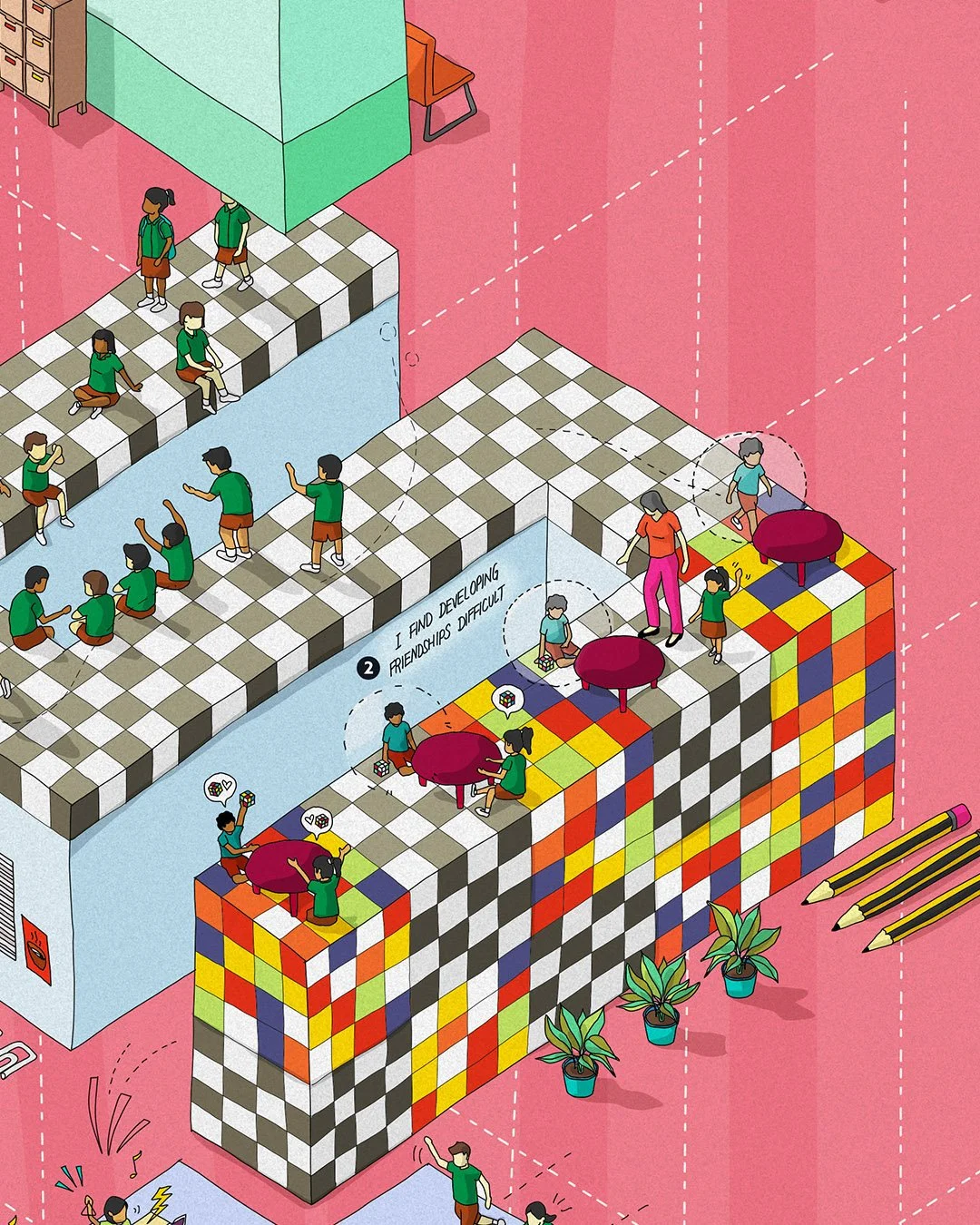
2. I find developing friendships difficult
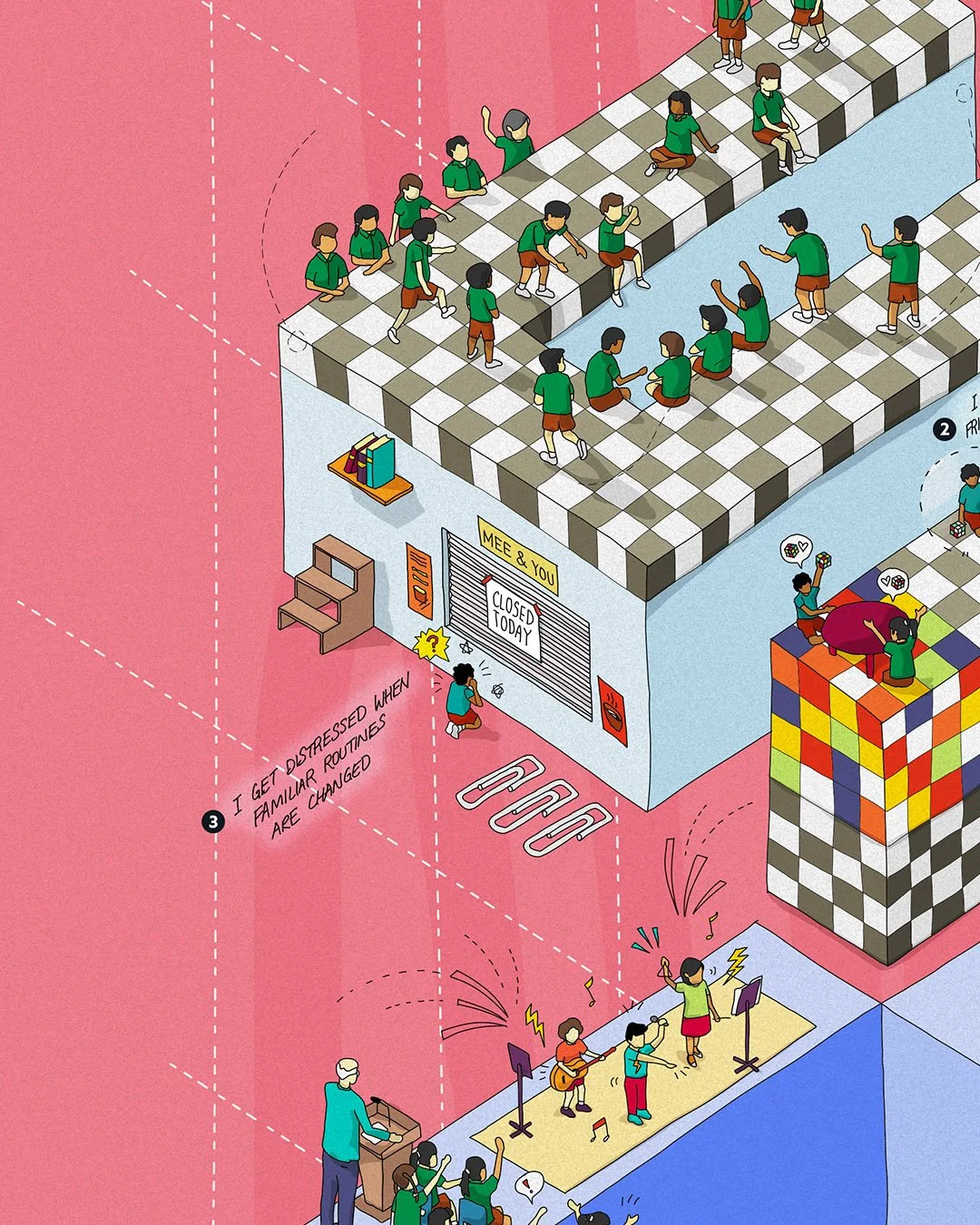
3. I get distressed when familiar routines are changed
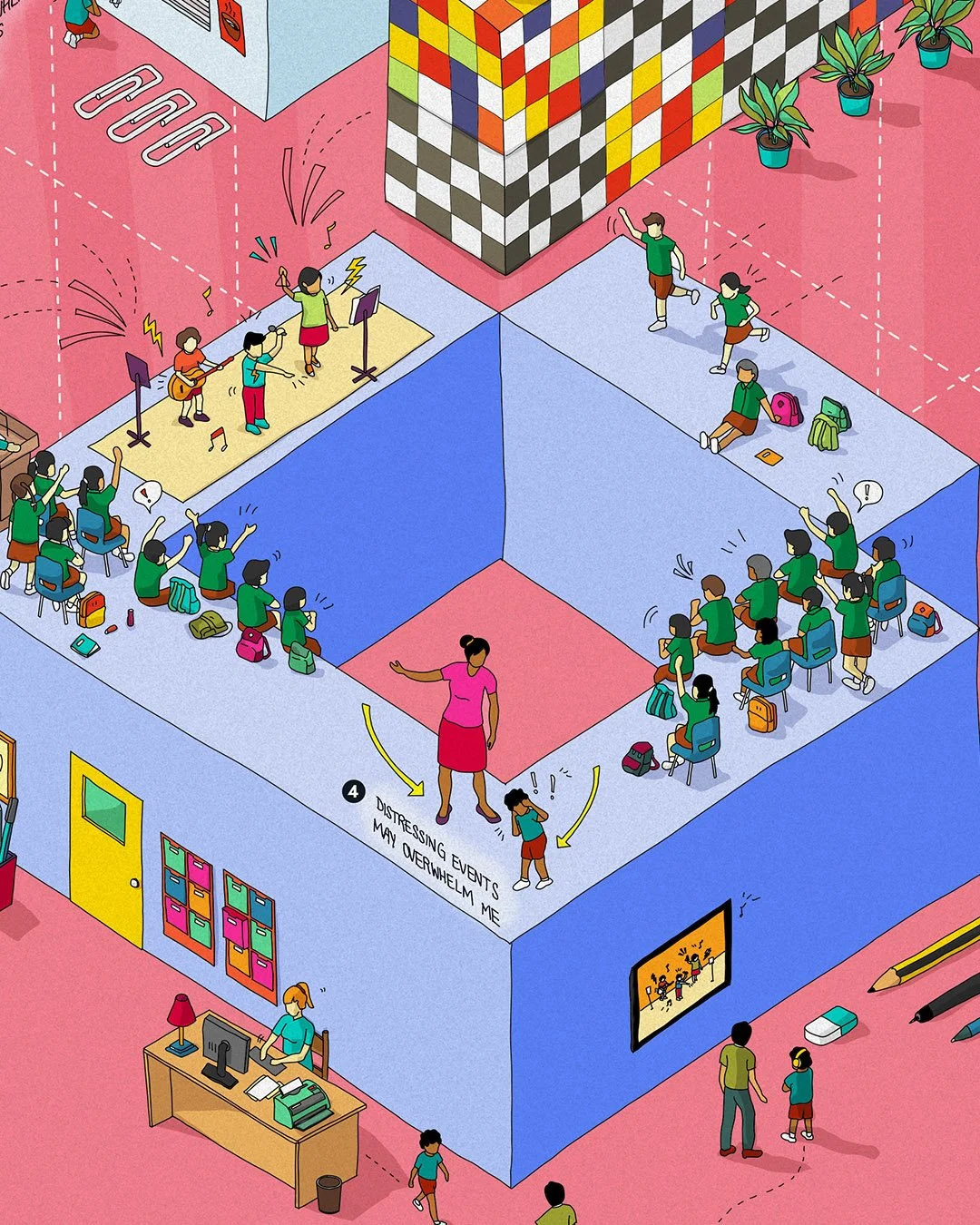
4. Distressing events may overwhelm me
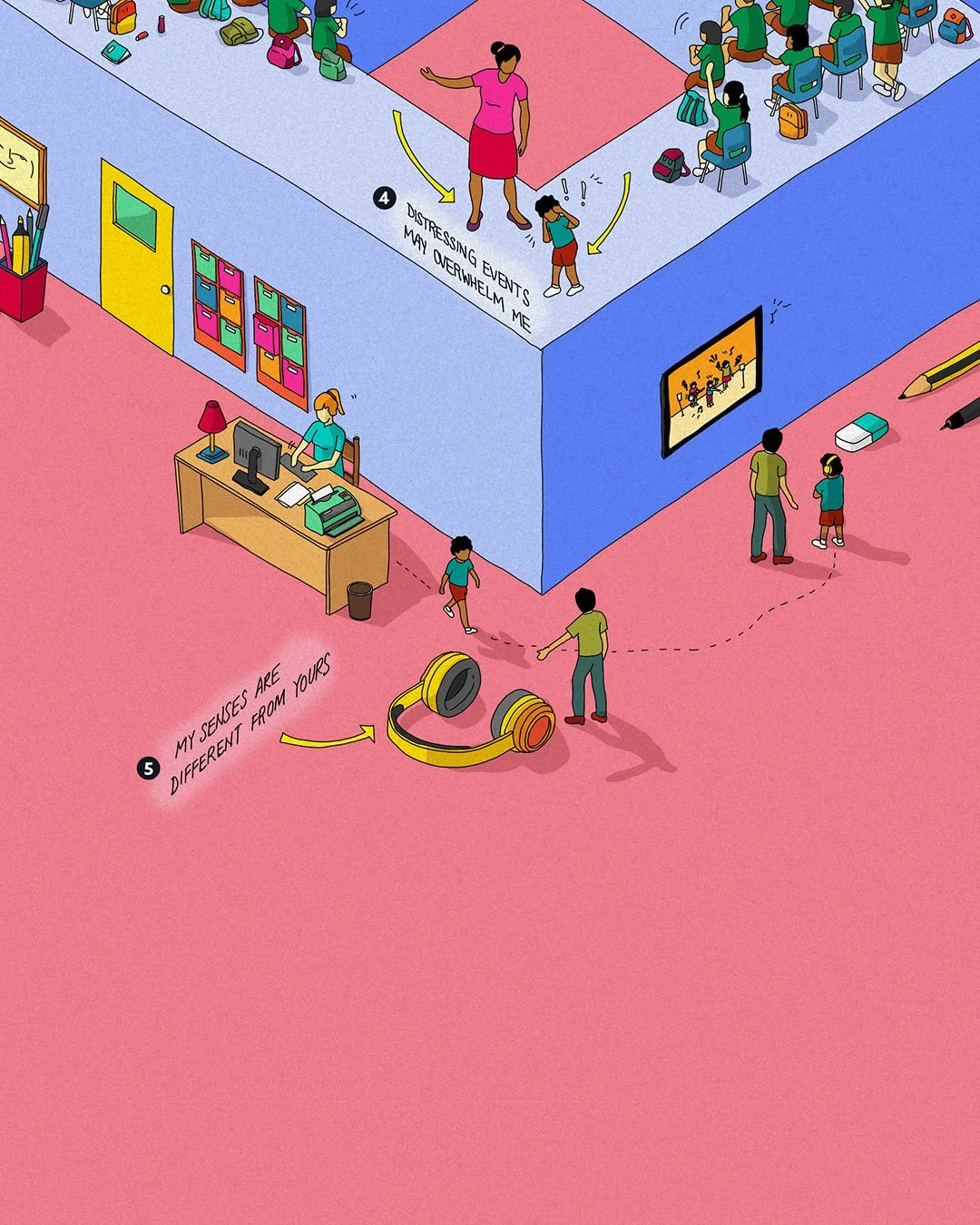
5. My senses are different from yours
From Art to Action
The final poster series was rolled out to every school in Singapore’s North Cluster.
This project was deeply collaborative from the start—the educational content, behavioural insights, and condition traits were thoughtfully provided by the dedicated school counsellors and Allied Educators of the North 7 Cluster.
To ensure the artwork created lasting, practical impact, each poster set was distributed alongside an easy-reference booklet filled with key facts and recommended classroom strategies for handling diverse learning behaviours.
Normalising neurodivergence education and early identification within mainstream schools is essential, and I am so glad to have been part of this initiative that helped lay the groundwork for a more empathetic and inclusive school system.
Easter Egg Hunt: Can you find mini versions of each poster hidden inside their own drawings?